
1. The Exterior: The Pressure Vessel
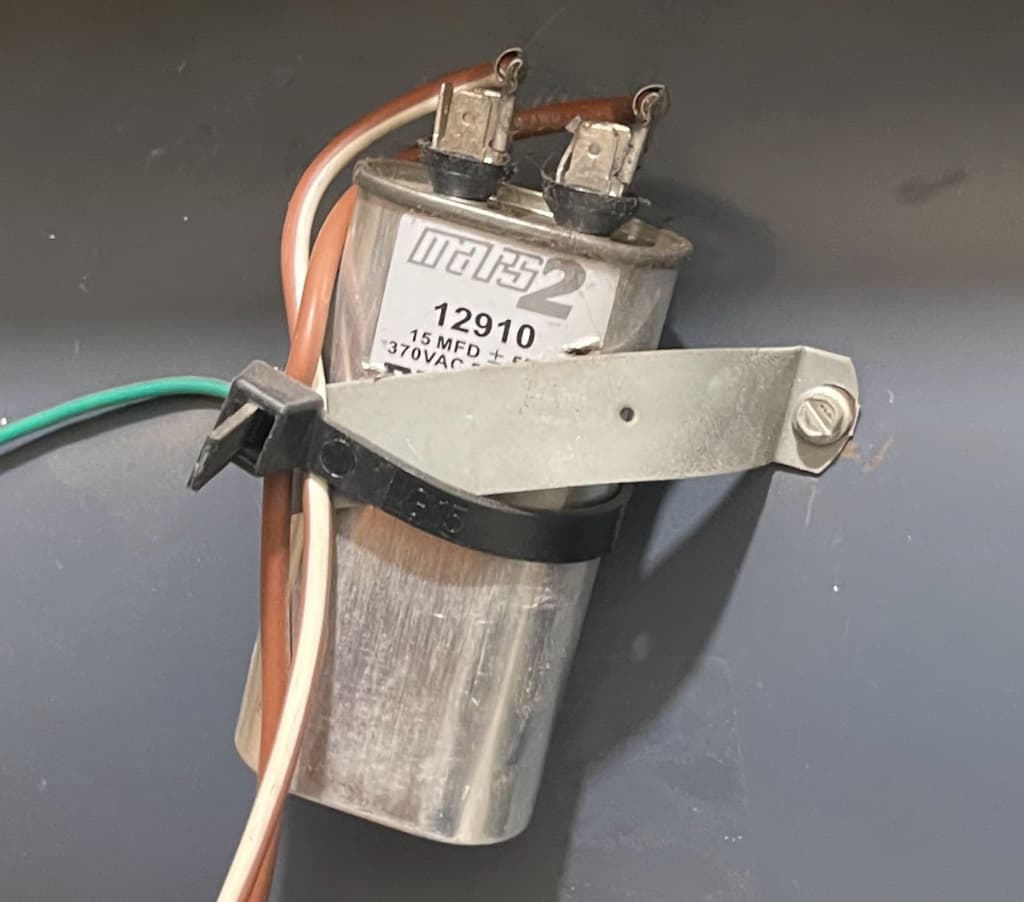
The first image shows the capacitor in its natural habitat. The label identifies it as a 15 MFD, 370VAC unit.
The Can
The aluminum casing isn't just a container; it is effectively a pressure vessel.
The Expansion Safety
Notice the rim at the top where the terminals are? In the event of a catastrophic failure (short circuit), the internal pressure builds up. The top of the can is designed to bulge upward like a balloon. This physical expansion snaps the internal connections, cutting power to the capacitor before it can explode or catch fire.
2. The Dielectric Barrier
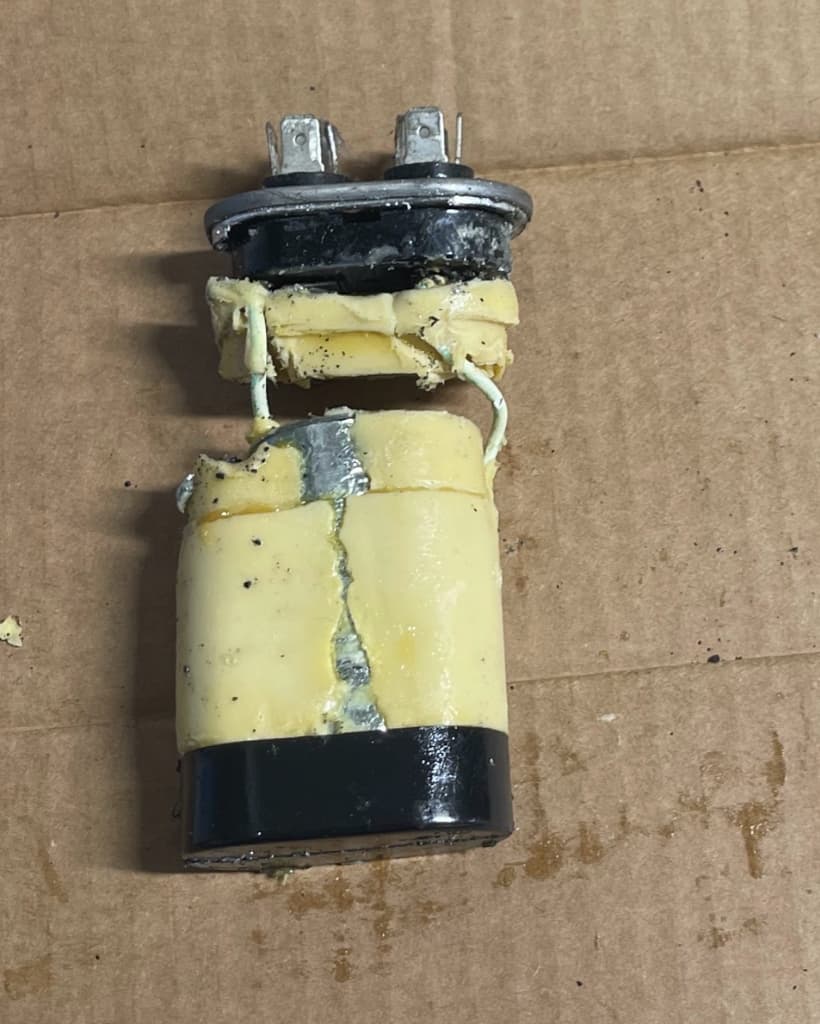
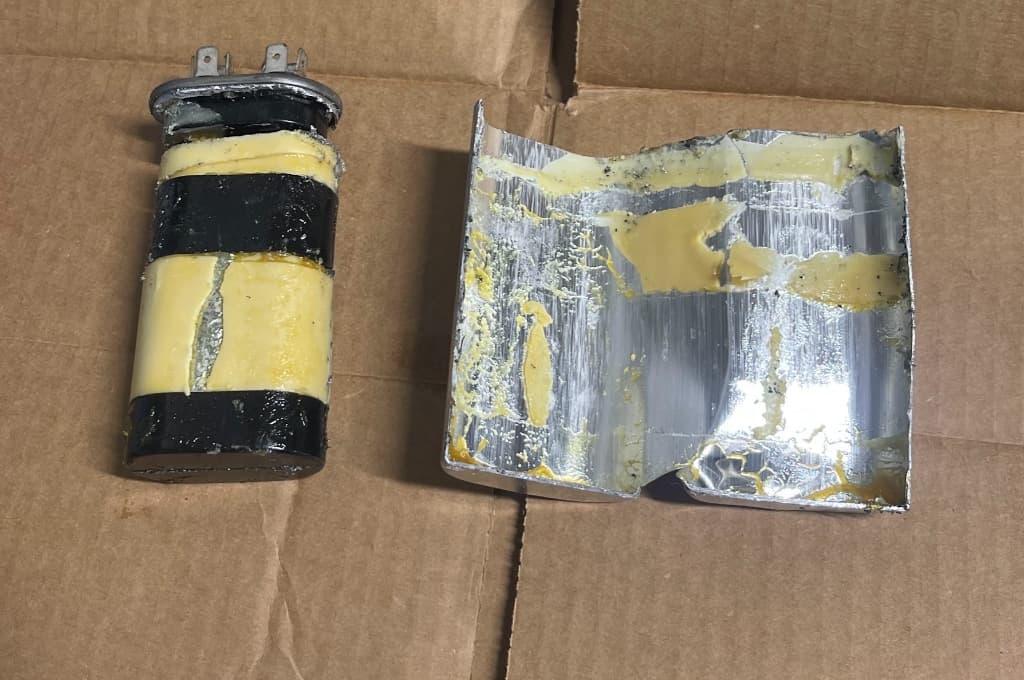
Once cut open, the first thing you notice is the yellow, waxy, or oily substance.
Potting Compound/Oil
In the past, capacitors were filled with toxic PCBs. Modern capacitors, like this Mars2, use a vegetable-based oil or a non-toxic mineral oil/wax mixture.
Purpose
This "goo" serves two critical roles:
- Insulation: It suppresses electrical arcing between the internal components and the metal case.
- Heat Dissipation: Capacitors get hot. The fluid transfers heat from the core to the aluminum shell, where it can radiate away.
The Mess
The messy texture seen in the images is typical. It ensures there are no air gaps inside, as air pockets can lead to "corona discharge" (tiny internal sparks) that slowly kill the capacitor.
3. The "Jelly Roll" Core
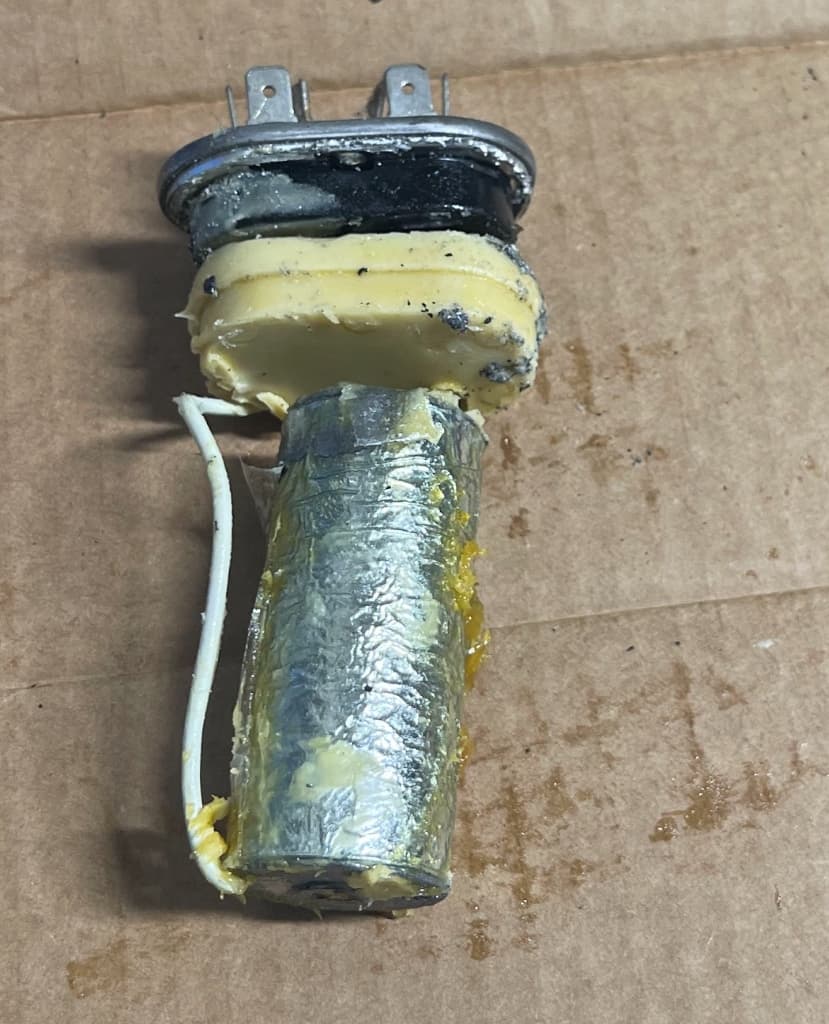
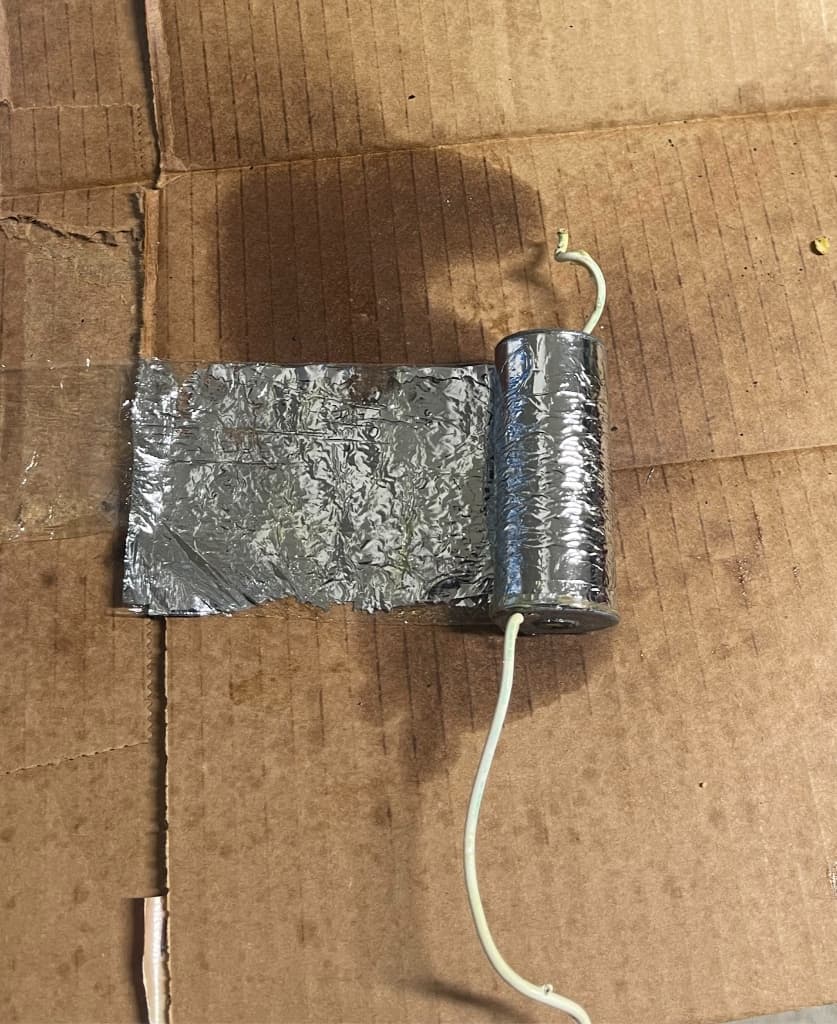
The images reveal the heart of the component: a cylindrical winding often called a "jelly roll." This is where the magic happens.
A capacitor stores energy in an electric field between two metal plates. To get 15 microfarads of storage into a can the size of a Red Bull, you can't use flat plates. You have to roll them up.
The Sandwich
In final photo, you have unrolled the core. You can clearly see the alternating layers:
- The Conductor: Thin sheets of aluminum foil (or metallized film). These act as the "plates" of the capacitor.
- The Dielectric: A thin plastic film (usually polypropylene) sandwiched between the foil layers. This prevents the foil sheets from touching (which would cause a short) while allowing the electric field to pass through.
By rolling these long strips into a tight cylinder, manufacturers pack square meters of surface area into a tiny volume.
4. Why Did It Fail?
Plastic film has tiny pinholes or black scorch marks, the capacitor suffered dielectric breakdown. This happens when high voltage punches a hole through the plastic insulation, causing an internal short circuit.
⚠️ A Note on Safety
Stored Charge: Capacitors store lethal amounts of energy. Even disconnected, they can shock you. Always discharge a capacitor by bridging the terminals with an insulated screwdriver before handling.
Chemicals: While this modern capacitor likely contains non-toxic oils, older capacitors (pre-1979) often contain PCBs, a potent carcinogen. Never cut open a capacitor unless you are certain of its vintage and manufacture.